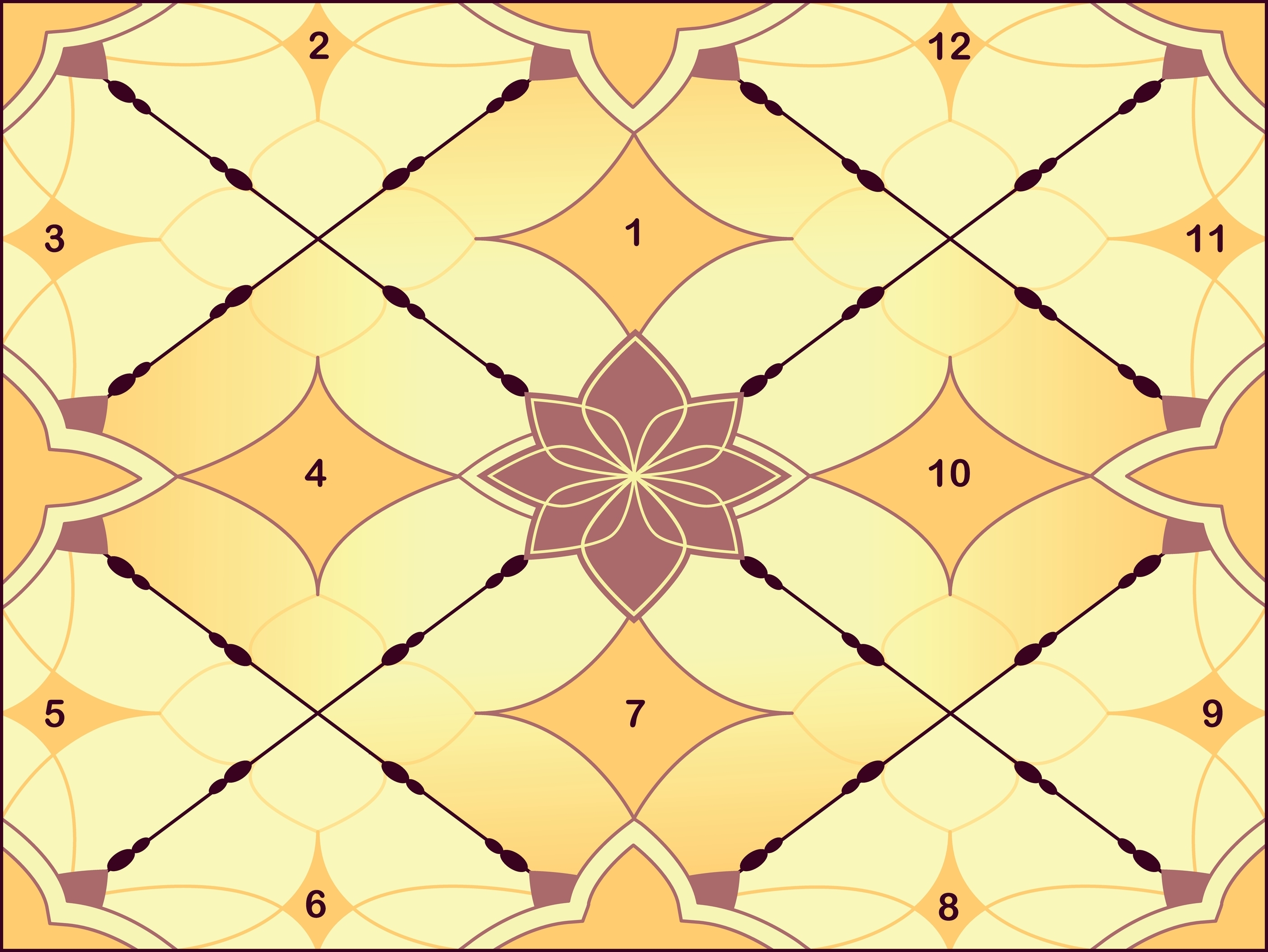
Vedic astrology, also known as Jyotish, is a centuries-old system of astrology of India. It has similarities with Western astrology, so if you are familiar with Western astrology, you will recognize common elements like the 12 signs of the zodiac, 12 houses, planets, planetary aspects, and transits. Elements such as the 27 nakshatras (fixed stars), divisional charts, and planetary periods that do not exist in Western astrology facilitate discovery of deep insights within a chart.
Perhaps the most readily apparent difference, though, is the use of the sidereal zodiac in Vedic astrology, whereas Western astrology typically uses the tropical zodiac. The sidereal system accounts for the precession of the equinoxes, and the end result is that the planets (and ascendant, aka rising sign) in your Vedic astrology chart are behind their positions in your Western (tropical) chart by the Ayanamsa, which is currently approximately 24 degrees. Since each sign covers 30 degrees of the zodiac, it is likely your planets will be in different signs and you will have a different ascendant in your Vedic chart. The precession of the equinoxes is well-known within astronomy and astrology communities, and has been discussed considerably online, including in a New York Times article in 2025; and hence I won't go into detail here.
Vedic Astrology can be applied to just about any facet of life, and attention to life's concrete, material elements is essential whether your main focus is on family, relationships, career, recreation, building wealth, or expands into spirituality. You will receive the most benefit from a consultation, though, if you seek something beyond the material. This applies whether you are wishing to augment your established spiritual life with knowledge from the stars, or are in the early stages of your spiritual path, or just feel like there is something missing that material life can't provide.
The Vedic philosophy of India is the underpinning of not only Indian spirituality, but much of the modern spirituality we see in practice today. Although it is the foundation of Hinduism, it is, in fact, so broad in its application that it applies across religious boundaries without needing to convert anyone to any religion. It acts like a brother or a helpful friend, supporting our spiritual (and material) life, regardless of our culture, belief system, or practices, if we follow dharmic living. While we must accept that different cultures, and individuals, have some variations in ideas of what is dharmic--righteous, ethical, and good—we have much in common too. And through true spiritual experience, we find that the deepest spiritual truths are absolute, and beyond creed or dogma.
Among the Vedic schools of thought are Yoga and Vedanta. Though Yoga is commonly known in the western world as a system of physical stretching exercises, sometimes accompanied by breathing exercises or meditation, it is in fact a school of thought, of which Hatha Yoga—the stretching exercises, as in “I went to Yoga class”—are a small part meant as a preparation for Raja Yoga. The Yoga school of thought has four main branches, or paths: Jnana Yoga (knowledge), Raja Yoga (spiritual practices such as Pranayama or breathing, and Dhyana, or meditation), Karma Yoga (selfless service), and Bhakti Yoga (devotion). Each of these four paths lead to the same goal: moksha, or liberation, oneness with the source of all life. In practice, yogis apply these in some combination, some leaning more to, say, Raja Yoga, or Bhakti Yoga.
The Vedas, the texts at the core of Vedic thought, were compiled by the great Sage Vyasa sometime around 3100-3000 BCE, and are believed to have been transmitted to him through direct perception of the Divine, which is possible for highly advanced souls. While the four Vedas (Rig, Yajur, Sama, and Atharva) focus on ritual, within them are the Upanishads, which focus on philosophical matters. Vedanta comes from the Upanishads and focuses on the Oneness of the individual soul (Atman) with the cosmic, universal soul (Brahman). So, we have these two paths, Yoga and Vedanta, which lead to the same goal.
Jyotish (Vedic astrology) comes from the Vedas. In fact, Parashara, the sage to whom we attribute much of the Jyotish knowledge we have today, was the father of the sage Vyasa.
My spiritual instruction, which commenced in 1998, and took place one on one with a fully liberated spiritual master (jivanmukta) over decades, incorporates both Yoga and Vedanta, and informs how I apply Jyotish in my life and to those who consult with me.
Follow
Substack, Instagram, Facebook, YouTube